Drone Cleaning: The Ultimate Guide for 2027
Table of Contents
- What Is Drone Cleaning?
- Why Commercial Cleaning Companies Are Adopting Drones
- What Can You Clean With a Drone?
- Choosing the Right Commercial Cleaning Drone
- What Equipment Do You Need for Drone Cleaning?
- Choosing a Drone Cleaning Skid, Truck or Trailer
- Pure Water and RO/DI: One of the Most Important Parts of Drone Cleaning
- Pressure Washing vs. Soft Washing With Drones
- Cleaning Chemicals, Surface Compatibility and Runoff
- Pumps, Hoses, Reels and Remote Controls
- Battery Management and On-Site Power
- FAA Regulations and Drone Cleaning Safety in 2027
- How Much Does It Cost to Start a Drone Cleaning Business?
- Common Mistakes When Starting a Drone Cleaning Business
- 1. Buying the Drone Before Planning the Ground Equipment
- 2. Underestimating Water Consumption
- 3. Choosing Equipment Based Only on Price
- 4. Ignoring Traditional Cleaning Methods
- 5. Overlooking Hose and Plumbing Restrictions
- 6. Underestimating Storage and Workspace
- 7. Ignoring Safety and Regulatory Requirements
- 8. Buying Equipment Without Considering Support
- Why the Complete Cleaning System Matters
- Frequently Asked Questions About Drone Cleaning
- Ready to Build Your Drone Cleaning Operation?
- FAQs
Commercial Drone Cleaning Equipment, Costs, Regulations, Pure Water Systems & Business Opportunities
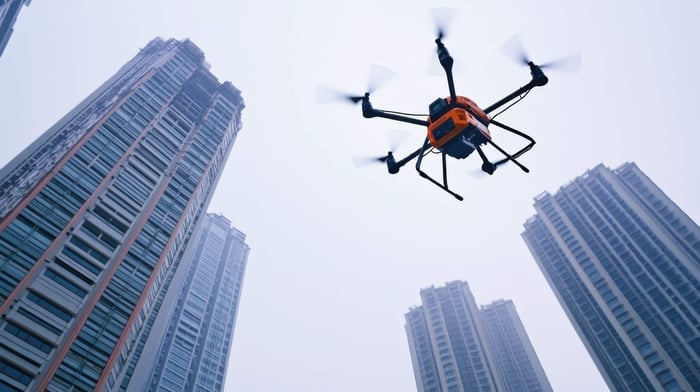
Drone cleaning is changing how professional contractors approach large buildings, commercial properties and other difficult-to-access surfaces.
Instead of relying exclusively on lifts, scaffolding, rope access or long extension poles, cleaning companies can use specialized drones to apply water and cleaning solutions to elevated surfaces while operating from the ground.
But there's much more to a successful drone cleaning operation than buying a drone.
The drone is only one part of the cleaning system. Pumps, water production, tanks, hoses, power, chemicals, controls and the ground support equipment all determine how efficiently the operation performs.
Whether you're considering starting a drone cleaning business, expanding an existing exterior cleaning company or upgrading your equipment, this guide explains what you need to know about commercial drone cleaning in 2027.
What Is Drone Cleaning?
Drone cleaning uses specialized unmanned aircraft equipped with spraying equipment to apply water or cleaning solutions to buildings and other structures.
Unlike traditional pressure washing, where an operator holds a spray wand, a drone carries the spray assembly into position while the operator controls it remotely.
Most commercial cleaning drones rely on a ground-based pumping system that delivers water or cleaning solution through a hose connected to the aircraft.
This arrangement allows the drone to remain relatively lightweight while the ground equipment supplies the water, pressure and flow needed for cleaning.
How a Drone Cleaning System Works
A typical commercial drone cleaning operation involves five primary components:
- Cleaning Drone: Positions the spray assembly and directs the cleaning process.
- Ground-Based Pump: Supplies water or cleaning solution at the required pressure and flow.
- Water Supply: Provides clean water, purified water or a properly prepared cleaning solution.
- Hose and Delivery System: Transfers water from the ground equipment to the aircraft.
- Operator and Controls: Manage flight, spray application, equipment settings and safety.
Some systems use battery-powered drones, while others support tethered power arrangements designed for extended operation.
The drone handles positioning and application.
The ground equipment provides the cleaning capability.
Why Commercial Cleaning Companies Are Adopting Drones
Drone cleaning can offer significant advantages for certain commercial exterior cleaning applications.
Reduced Work at Height
Traditional high-access cleaning may require lifts, scaffolding or rope-access technicians.
Drones can perform some elevated cleaning tasks while operators remain on the ground, reducing the need to place workers at height.
That doesn't eliminate operational risk. Drone flights introduce their own safety requirements involving aircraft, hoses, electrical hazards, people and surrounding property.
However, reducing unnecessary work at height can be a major advantage.
Faster Access to Large Surfaces
Commercial buildings often have large areas of siding, glass, panels or architectural surfaces that require cleaning.
A drone may be able to reposition between these areas without repeatedly moving a lift or rebuilding access equipment.
Actual productivity depends on building geometry, cleaning requirements, flight restrictions and the supporting water system.
Less Access Equipment
Certain projects can be completed with less reliance on aerial lifts, scaffolding and other access equipment.
That can reduce equipment rental requirements, mobilization time and jobsite congestion.
Expanded Service Opportunities
Drone cleaning may allow existing pressure washing, soft washing and window cleaning contractors to pursue work that previously required specialized access equipment.
For an established cleaning company, the opportunity isn't necessarily to replace existing services.
It's to add another way to perform them.
What Can You Clean With a Drone?
Drone cleaning is most useful when the surface is accessible from the air and the cleaning method is compatible with the material.
| Application | Potential Drone Cleaning Use | Important Considerations |
|---|---|---|
| Commercial buildings | Exterior rinsing, soft washing and selected pressure washing | Surface condition, height, overspray and access |
| Warehouses | Large wall panels and exterior façades | Water demand, wind and surrounding operations |
| Office buildings | Exterior glass and façade cleaning | Water quality, spotting and architectural details |
| Hotels and resorts | Exterior surfaces and difficult-access areas | Guests, pedestrians and overspray |
| Industrial facilities | Exterior structures and equipment housings | Site hazards, electrical equipment and contamination |
| Roofs | Selected low-pressure chemical applications | Roofing material, runoff and manufacturer guidance |
| Solar installations | Selected compatible cleaning applications | Panel manufacturer requirements, water quality and electrical safety |
Where Drones Aren't the Best Tool
Not every surface should be cleaned by drone.
Some jobs require brushing, agitation, detailed handwork or access to areas obstructed by trees, overhead wires, architectural features or other structures.
Others may involve fragile materials, restricted airspace or unacceptable overspray.
This is why a complete commercial cleaning operation should still have traditional equipment available.
The most versatile setup combines drone cleaning with conventional pressure washing, soft washing and water-fed pole cleaning.
Choosing the Right Commercial Cleaning Drone
Not all drones are designed for cleaning.
A professional cleaning drone must be capable of safely handling its spraying equipment, operating near structures and managing the forces introduced by a connected hose.
Important Features to Compare
Flight Stability
The aircraft needs to maintain controlled positioning while operating near buildings and managing spray forces and hose movement.
Payload and Hose Management
The drone must be compatible with the intended spray assembly, hose arrangement and operating conditions.
Battery Life or Tethered Power
Battery-powered drones require a charging and battery-management strategy. Tethered-power systems may support longer operations but introduce additional equipment and operational considerations.
Spray Compatibility
Different applications may require different nozzles, pressures, flow rates and chemical compatibility.
Service and Parts Availability
A commercial cleaning drone is business equipment. Replacement components, technical assistance and repair support matter.
Regulatory Compatibility
The aircraft's weight, configuration and intended operation can affect which FAA requirements apply.
Don't Choose a Drone Based on Flight Time Alone
A drone that can remain airborne for extended periods isn't necessarily more productive if the ground system cannot supply enough water.
Likewise, an excellent pump and filtration system cannot compensate for an aircraft unsuitable for the application.
Choose the drone and ground equipment as one coordinated system.
What Equipment Do You Need for Drone Cleaning?
A complete commercial drone cleaning operation requires more than an aircraft and pressure washer.
Use this checklist when planning a new system or comparing equipment packages.
Drone Cleaning Equipment Checklist
- Commercial cleaning drone and compatible spray assembly
- Flight controller and required aircraft accessories
- Batteries, chargers or approved tethered-power equipment
- Ground-based pressure washing system
- Soft wash pump and chemical delivery equipment, when needed
- RO/DI pure-water system for applications requiring purified water
- Adequate clean-water storage
- Dedicated chemical storage and compatible plumbing
- Dirty-water recovery equipment and storage, where required
- Properly sized manifolds, fittings and supply plumbing
- High-capacity hose reels and sufficient hose
- Remote controls and pump controls
- Generator or appropriate electrical power source
- Traditional pressure washing and soft washing equipment
- Water-fed pole equipment for inaccessible areas
- PPE, barriers, signage and emergency equipment
- Transportation platform: skid, truck, flatbed or trailer
The exact equipment depends on your services, crew size, water requirements and jobsite conditions.
A contractor cleaning commercial windows may prioritize high-output purified water.
A contractor performing building soft washing may prioritize chemical delivery, pump capacity and remote controls.
A multi-service contractor may need both.
Choosing a Drone Cleaning Skid, Truck or Trailer
Once you've selected the drone, the next major decision is how to transport and operate the ground equipment.
Portable and Compact Skids
Compact skids can be a practical starting point for contractors with existing vehicles.
They can provide essential pumping, water storage and hose equipment without requiring a dedicated enclosed trailer.
The trade-off is limited storage, working space and future expansion capacity.
Truck-Mounted Systems
Truck skids integrate equipment directly onto a vehicle.
They can provide a convenient, self-contained working platform for crews that regularly travel between commercial properties.
Flatbed Systems
Flatbeds offer accessible equipment layouts and can accommodate larger tanks, pumps and support equipment.
They're especially useful for contractors requiring significant capacity and multiple cleaning services.
Enclosed Drone Cleaning Trailers
Enclosed trailers provide protected equipment storage, dedicated working space and room for larger integrated systems.
ProTool's larger enclosed drone cleaning platforms use a 7' × 16' trailer, allowing room for cleaning equipment, generators, drone cases, tools, storage and future expansion.
Available features include:
- Exterior Pop-Out Command Port
- Integrated workbench and drawers
- Waterproof flooring
- Available vinyl interior walls
- Interior LED lighting
- Dedicated pure and dirty-water tanks
- High-output RO/DI systems
- Integrated electrical and charging
- Remote-controlled cleaning equipment
- Water-fed pole systems
- Equipment and pole storage
A larger trailer isn't automatically the best choice for every operator.
But if you're building a multi-service commercial cleaning operation, usable space and system integration become important very quickly.
[INTERNAL LINK: Drone Cleaning Trailer—What to Look for in a Professional Rig]
[INTERNAL LINK: ProTool Drone Cleaning Trailer vs. Lower-Cost Rigs]
Pure Water and RO/DI: One of the Most Important Parts of Drone Cleaning
Water quality is especially important when cleaning glass, solar panels and surfaces where mineral spotting is a concern.
Ordinary tap water contains dissolved minerals.
When water evaporates, those minerals can remain on the surface and create spots or residue.
A properly operating pure-water system reduces dissolved solids, helping produce cleaner rinsing results on suitable surfaces.
What Is RO/DI?
RO/DI stands for Reverse Osmosis and Deionization.
Reverse osmosis removes much of the dissolved mineral content from incoming water.
Deionization then polishes the remaining dissolved solids to the required purity.
This combination can reduce the amount of DI resin consumed compared with processing the entire mineral load through DI alone.
Why Production Rate Matters
Here's a mistake new drone operators can make:
They buy a large water tank but pair it with a purification system that produces water too slowly.
A tank stores water.
The RO/DI system determines how quickly that water can be replenished.
If a drone consumes water faster than the purification system can produce it, stored water begins to decline.
Once the tank runs out, cleaning stops until enough water is available again.
That means downtime, idle equipment and paid labor waiting for water.
Example: Understanding Water Demand
Consider a drone application consuming 5 gallons per minute.
If it operates for 30 minutes of actual spraying, it uses:
150 gallons of water.
Now imagine your RO/DI system produces only 1 gallon per minute.
During those 30 minutes, it replenishes approximately 30 gallons.
The net reduction in stored water is approximately 120 gallons.
A larger tank provides more working time, but it doesn't eliminate the production deficit.
The correct system depends on actual spraying duration, flow rate, refill opportunities and crew requirements.
High-Output Pure Water Systems
ProTool HydroPanel systems provide several production capacities for different applications.
| System | Approximate Rated Production | Typical Consideration |
|---|---|---|
| HydroPanel Mini | 1–1.25 GPM | Lower-demand pure-water applications |
| HydroPanel 2.0 | 2 GPM | Moderate pure-water demand |
| HydroPanel 3.0 | 3+ GPM | Higher-demand applications |
| HydroPanel 4.5 | 4.5 GPM | High-output production and larger integrated systems |
Actual production varies with incoming water conditions, temperature, pressure, membrane condition and system configuration.
Larger commercial rigs may use multiple purification systems to increase production capacity.
The goal is to match pure-water production and storage to actual consumption—not simply install the largest tank that fits.
[INTERNAL LINK: Why Pure Water Is Essential for Drone Cleaning]
[INTERNAL LINK: HydroPanel Pure Water Systems]
Pressure Washing vs. Soft Washing With Drones
Drone cleaning can involve different application methods.
The appropriate approach depends on the surface, contamination and equipment.
Drone Pressure Washing
Pressure washing uses pressurized water to remove dirt and other contaminants.
In drone applications, pressure, nozzle selection, spray distance and aircraft stability all need to be considered.
Higher pressure isn't automatically better.
Excessive pressure can damage building materials, coatings, seals and other surfaces.
Drone Soft Washing
Soft washing uses controlled chemical application and lower-pressure delivery to treat suitable surfaces.
It may be appropriate for certain organic growth and exterior cleaning applications.
The chemical formulation, concentration, dwell time and rinse process must be compatible with the material being cleaned.
Why a Multi-Service Ground Rig Matters
A commercial operator may need to alternate between pressure washing, soft washing and pure-water rinsing.
A properly configured system can provide dedicated equipment for these functions rather than forcing one pump or plumbing arrangement to perform every task.
ProTool drone cleaning builds can incorporate high-output pressure washing equipment, dedicated soft wash pumps, chemical metering and pure-water delivery.
This flexibility allows contractors to adapt to different cleaning requirements without completely changing equipment platforms.
Cleaning Chemicals, Surface Compatibility and Runoff
Chemical selection is one of the most important parts of a successful drone cleaning operation.
Not every cleaning solution is appropriate for every building material.
Before application, evaluate:
- Surface material and condition
- Type of contamination
- Chemical compatibility
- Required dilution and application method
- Manufacturer cleaning recommendations
- Nearby landscaping and sensitive materials
- Wind and overspray
- Drainage and runoff requirements
Follow chemical labels and safety data sheets.
Never assume a product suitable for conventional ground spraying is automatically suitable for aerial application.
Managing Overspray
Wind can carry cleaning solutions beyond the intended surface.
Operators need to account for nearby vehicles, pedestrians, landscaping, HVAC equipment, windows and other sensitive areas.
Managing Wastewater
Some jobs require wastewater containment or recovery depending on local regulations, site conditions and the contaminants involved.
A drone cleaning system should be planned around the property's drainage and environmental requirements.
Cleaning the building is only part of the job. Controlling what happens to the water afterward matters too.
Pumps, Hoses, Reels and Remote Controls
The ground delivery system directly affects drone cleaning performance.
Pump Capacity
The pump must provide the pressure and flow required by the selected application while accounting for losses through hoses, fittings and other components.
Hose Diameter
Long hose runs and undersized plumbing can introduce significant friction loss.
A high-output pump may not deliver its intended performance if the supply or delivery plumbing is too restrictive.
Hose Reels
Larger-capacity reels can accommodate longer and larger-diameter hoses.
That increases working range and may reduce the need to repeatedly reposition the rig.
Remote Controls
Remote systems allow operators to manage selected functions from the work area rather than returning to the trailer.
Depending on the configuration, remote controls can manage pumps, chemical selection and other equipment functions.
Centralized Controls
ProTool's Pop-Out Command Port places key controls and visible system-status indicators on the exterior of the trailer.
Instead of entering the trailer to check individual components, operators can access important controls from one location.
A well-designed delivery system saves time throughout the job—not just during initial setup.
Battery Management and On-Site Power
Commercial drone cleaning operations need a reliable power strategy.
Battery-powered drones require sufficient batteries and charging capacity to support the intended working schedule.
Tethered-power systems may provide extended operating capability, but require compatible equipment and additional planning.
Questions to Consider
- How long can the drone operate during each flight?
- How many batteries are required for the planned schedule?
- How quickly can batteries be charged?
- Is adequate electrical power available at the property?
- Will the rig require a generator?
- Where will batteries and chargers be stored?
- How will heat and ventilation be managed?
Larger enclosed rigs may incorporate centralized shore power, charging stations, organized 12V electrical and dedicated equipment storage.
Ventilation and Exhaust Safety
Engines and generators generate heat and potentially dangerous exhaust gases.
Poor ventilation, improper exhaust routing or excessive heat buildup can create equipment problems, fire hazards and carbon monoxide risks.
Combustion engines and generators must only be operated in configurations specifically designed and approved for safe exhaust discharge and ventilation.
Power, charging, ventilation and exhaust should be designed together—not added as afterthoughts.
FAA Regulations and Drone Cleaning Safety in 2027
Commercial drone cleaning in the United States involves aviation regulations as well as the safety requirements associated with cleaning equipment.
Operators should verify current requirements with the FAA before beginning operations.
Part 107 and Commercial Operations
FAA Part 107 governs many commercial small-drone operations involving aircraft weighing less than 55 pounds, including applicable onboard equipment and payload.
A Part 107 Remote Pilot Certificate is generally required for operations conducted under that rule.
The FAA also establishes requirements involving registration, airspace, flight operations and other operating limitations.
Aircraft Weighing 55 Pounds or More
Larger aircraft may fall outside standard Part 107 operating authority.
These operations can involve different registration, certification, exemption and operational requirements.
Do not assume that obtaining a Part 107 certificate alone authorizes operation of a heavier cleaning drone.
Tethered Drones
A tethered drone isn't automatically exempt from FAA requirements.
The applicable rules depend on the aircraft, tether arrangement and specific operation.
Spraying Chemicals
Certain aerial dispensing activities can fall under FAA Part 137 or other regulatory requirements, depending on the substance and intended purpose.
Operators should verify whether their particular cleaning or chemical application is covered before beginning commercial work.
Remote ID and Airspace
Commercial drones generally must comply with applicable registration and Remote ID requirements.
Operations in controlled airspace may require authorization.
Additional rules can apply to nighttime operations, flights over people and other advanced operations.
Jobsite Safety
A professional drone cleaning operation should include:
- Preflight inspections
- Airspace review
- Weather and wind assessment
- Ground hazard identification
- Hose and tether management
- Pedestrian and vehicle exclusion areas
- Electrical hazard awareness
- Chemical handling procedures
- Emergency landing procedures
- Communication between crew members
- Equipment shutdown procedures
Drone cleaning can reduce the need for some traditional high-access work, but it does not eliminate the need for training and professional safety procedures.
Official resources:
- FAA Commercial Drone Operators
- FAA Part 107 Overview
- FAA Drone Registration
- FAA Aerial Dispensing and Part 137
Regulatory information should be reviewed before publication and periodically afterward, particularly when operating rules or aircraft configurations change.
How Much Does It Cost to Start a Drone Cleaning Business?
The total investment depends on the aircraft, ground equipment, transportation platform, crew and services being offered.
A basic operation using an existing vehicle may have very different costs from a fully integrated commercial drone cleaning trailer.
Major Startup Expenses
| Expense | What to Budget For |
|---|---|
| Cleaning drone | Aircraft, spray equipment, controls and accessories |
| Ground equipment | Pumps, filtration, tanks, manifolds and hoses |
| Transportation | Existing truck, skid, flatbed or enclosed trailer |
| Power | Batteries, chargers, generators and electrical integration |
| Safety and compliance | Training, registrations, insurance and operational requirements |
| Chemicals and consumables | Cleaning solutions, filters, DI resin and maintenance supplies |
| Business development | Marketing, estimating, sales and customer acquisition |
There is no single realistic startup price for every operation.
A contractor who already owns a truck, pressure washer, soft wash system and pure-water equipment may need considerably less additional ground equipment than someone starting from scratch.
Understanding Operating Costs
Beyond the initial equipment purchase, consider:
- Crew labor
- Travel and mobilization
- Fuel and electricity
- Water
- Chemicals
- Filter and DI resin replacement
- Equipment maintenance
- Battery replacement
- Insurance
- Training
- Equipment depreciation
- Downtime
How to Calculate Drone Cleaning Profitability
Start with a straightforward formula:
Job Revenue − Direct Job Costs = Gross Profit Before Overhead
Then account for overhead, equipment ownership costs and other business expenses to estimate true profitability.
The important question isn't simply how much a drone can clean per hour.
It's how much profitable work the complete operation can perform over a week or month.
What Drives Return on Investment?
Drone cleaning profitability depends heavily on:
Utilization: How consistently the equipment is booked.
Productivity: How much work the crew can complete.
Service Mix: Whether the rig can handle multiple cleaning applications.
Downtime: How often equipment or water supply interruptions stop production.
Customer Acquisition: Whether the business can consistently win profitable commercial contracts.
Equipment Flexibility: Whether the system can be used on jobs that don't require the drone.
A versatile cleaning rig can be especially valuable because it can continue generating revenue through conventional pressure washing, soft washing and water-fed pole work.
Common Mistakes When Starting a Drone Cleaning Business
1. Buying the Drone Before Planning the Ground Equipment
The aircraft gets the attention, but the ground equipment determines water delivery, pressure, flow and much of the operational efficiency.
Plan both together.
2. Underestimating Water Consumption
An undersized RO/DI system or inadequate water storage can create repeated interruptions.
Calculate demand before purchasing equipment.
3. Choosing Equipment Based Only on Price
A lower initial price may come with reduced capacity, smaller plumbing, fewer controls, less storage or limited expansion options.
Compare complete configurations rather than isolated equipment prices.
4. Ignoring Traditional Cleaning Methods
Drones won't handle every surface or access condition.
Without traditional cleaning equipment, operators may need additional vehicles and crews to finish a property.
5. Overlooking Hose and Plumbing Restrictions
Pump specifications alone don't determine delivered performance.
Hose length, diameter, fittings and manifolds all matter.
6. Underestimating Storage and Workspace
A compact trailer may fit the pumps and tanks but leave nowhere practical for drone cases, tools, batteries or future equipment.
7. Ignoring Safety and Regulatory Requirements
Commercial drone cleaning requires proper aviation compliance, jobsite planning and equipment safety.
8. Buying Equipment Without Considering Support
Commercial cleaning rigs combine several systems.
Training, parts availability, troubleshooting and long-term technical support can be just as important as the initial specifications.
Why the Complete Cleaning System Matters
The most effective drone cleaning operation isn't necessarily the one with the largest drone, highest-pressure pump or biggest water tank.
It's the one where the equipment works together.
Water production supports consumption.
Storage supports working time.
Plumbing supports pump performance.
Hoses and reels support working range.
Controls support the operator.
Power supports the aircraft and ground equipment.
The transportation platform protects the investment and provides room to work.
And the entire system supports the services the contractor actually sells.
Built for Professional Cleaning Operations
ProTool designs and manufactures integrated commercial cleaning skids, trucks, flatbeds and trailers for drone cleaning, pressure washing, soft washing and pure-water applications.
Our approach is to build the complete cleaning system, not simply install equipment onto a platform.
Available configurations range from more compact systems to advanced enclosed drone cleaning trailers with high-output RO/DI, dedicated water storage, remote controls, integrated electrical and multi-service capability.
Backed by J. Racenstein's experience serving professional cleaners since 1909, ProTool systems are designed around real commercial cleaning workflows and long-term equipment support.
[INTERNAL LINK: Explore ProTool Drone Cleaning Builds]
[INTERNAL LINK: Request a Custom Cleaning Skid Quote]
Frequently Asked Questions About Drone Cleaning
Ready to Build Your Drone Cleaning Operation?
Whether you're launching a new drone cleaning business or expanding an established commercial cleaning company, choosing the right equipment starts with understanding your applications, water requirements and operating goals.
The drone gets you to the building. The complete cleaning system determines what happens next.
Explore ProTool's commercial drone cleaning systems or connect with the J. Racenstein team to discuss a configuration built around your operation.
[CTA: Explore Drone Cleaning Skids & Trailers]
[CTA: Request a Custom ProTool Build Quote]
FAQs
What is drone cleaning?
Drone cleaning uses specialized aircraft equipped with spraying systems to apply water or cleaning solutions to elevated or difficult-access surfaces. Most commercial systems use ground-based pumps and hoses to deliver the cleaning solution to the drone.
Can drones clean windows?
Yes, certain drone cleaning systems can apply purified water to suitable exterior glass. Results depend on water quality, contamination, application method and whether mechanical agitation is required.
Do you need purified water for drone cleaning?
Not for every application. However, purified water is particularly useful for glass, solar panels and other surfaces where dissolved minerals could leave spotting after rinsing.
How much water does a cleaning drone use?
Consumption varies by drone, pump, nozzle, pressure and cleaning method. Calculate water demand using the actual operating flow rate and expected spraying time rather than relying on a universal figure.
Do you need an RO/DI system?
An RO/DI system is often beneficial for commercial pure-water cleaning, especially when substantial water volumes are required. The correct filtration setup depends on incoming water quality, required purity and production demand.
Can one drone cleaning rig handle pressure washing and soft washing?
Yes, when the ground equipment is designed with compatible pumps, chemical delivery, plumbing and controls for each service.
Can a drone cleaning rig support multiple operators?
Yes, if the complete system has sufficient water production, storage, pumping, plumbing and electrical capacity. Multiple hose connections alone do not guarantee simultaneous operating capacity.
Do you need a license for commercial drone cleaning?
Yes. In the United States, commercial drone cleaning generally requires an FAA Part 107 Remote Pilot Certificate. This certification allows qualified pilots to operate drones weighing less than 55 pounds under applicable FAA regulations.
Larger drones, certain chemical-spraying operations and specialized flight activities may require additional FAA exemptions, certifications or authorizations.
Operators must also comply with applicable aircraft registration, Remote ID, airspace and safety requirements.
Are tethered cleaning drones exempt from FAA regulations?
No. Tethering does not automatically exempt an aircraft from aviation requirements. The applicable rules depend on the aircraft and operation.
Can ProTool help build a complete drone cleaning system?
Yes. ProTool builds integrated drone cleaning skids, trucks, flatbeds and trailers, including pressure washing, soft washing, RO/DI pure water, remote controls and other commercial cleaning equipment.