
Pressure Washers
Less Time Rinsing. More Ground Covered.
Match your pressure washer to the work ahead. Shop gas-powered pressure washers for concrete cleaning, commercial exterior maintenance, and compatible solar brush applications, with portable options and high-flow units for truck or trailer mounting.
Compare flow, pressure, and mounting options to find the machine that fits your workload. Bring the right muscle to the job.
Not sure which flow rate fits your business? Start with our 4 GPM vs. 5.5 GPM vs. 8 GPM pressure washer buying guide.
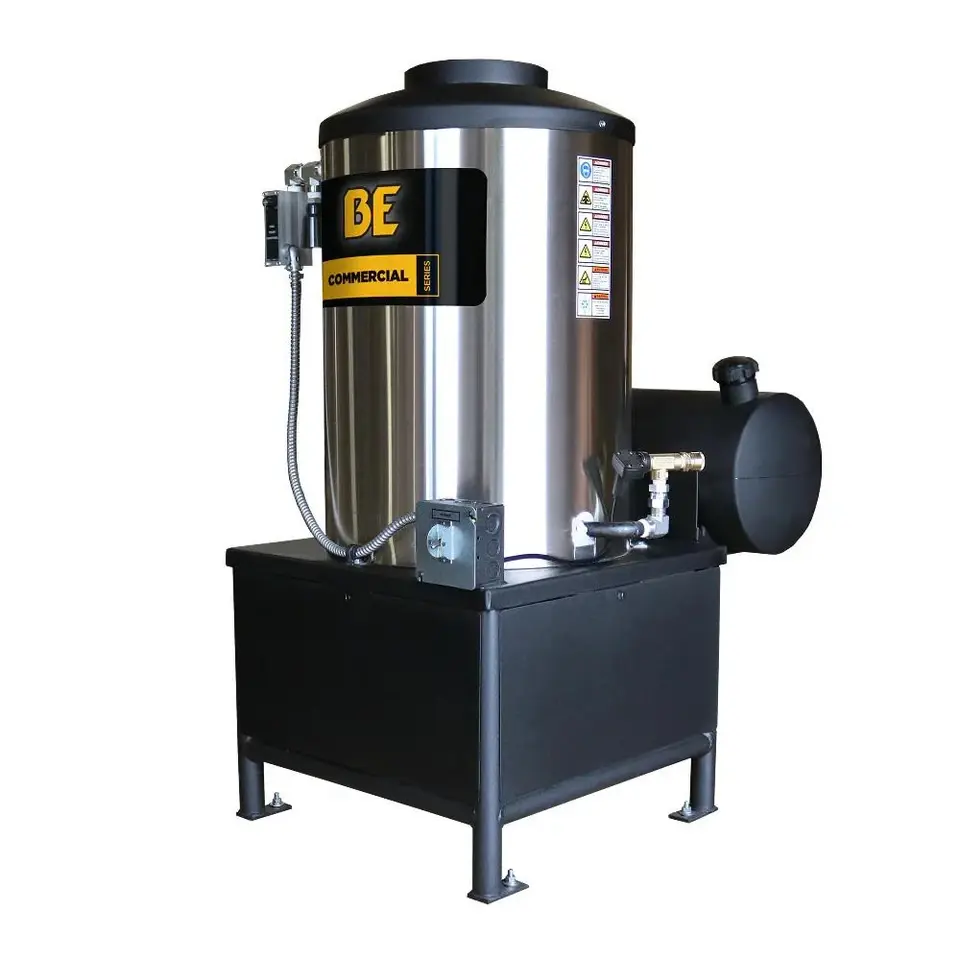
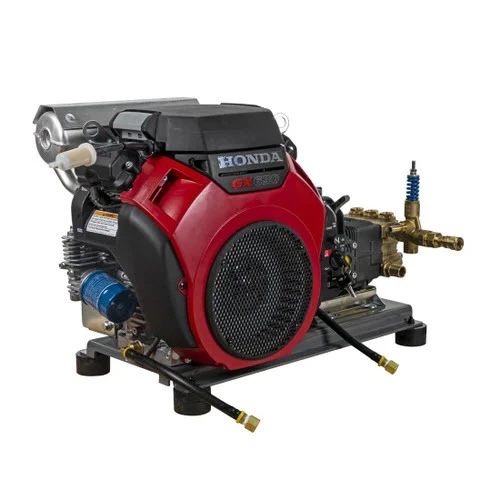
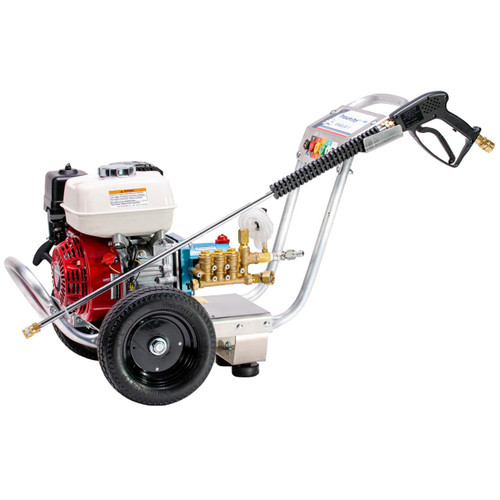


Pressure Washers That Match the Work Ahead
A pressure washer should earn its place on your rig by helping you finish jobs efficiently—not simply by having the biggest PSI number on the label. Cleaning residential driveways, rinsing commercial flatwork, washing equipment, and powering a compatible rotary brush all put different demands on a machine. The right choice balances water flow, working pressure, water supply, and the tools you plan to run.
ProTool’s selection includes portable direct-drive pressure washers, higher-flow gas-powered units for truck and trailer mounting, and a dedicated ProTool Solar Brush Pressure Washer for compatible brush applications. Whether you are replacing one machine or planning a complete setup, start with your everyday workload. Choose the capability that helps you finish the work you want to take on, with a water supply and installation that let the machine perform.
GPM vs. PSI: What Actually Helps You Finish Faster?
GPM measures how much water a pressure washer moves each minute. PSI measures pressure. Suitable pressure helps remove adhered contamination, while water volume carries loosened material away and supports productive rinsing. Once you have enough pressure for the application, additional flow can be more valuable than another increase in PSI. Less time chasing dirty water across concrete means more time moving to the next section.
- 4 GPM: A practical starting point for smaller residential jobs, portable setups, and tighter equipment budgets.
- 5–5.5 GPM: A strong compact option for residential driveways, sidewalks, and general exterior cleaning, with more rinsing volume than 4 GPM.
- 8 GPM: ProTool’s preferred starting point for a production-focused commercial rig when water supply, storage, and budget support it.
- Higher flow: Worth evaluating for substantial commercial work and demanding rinsing applications, with water demand planned accordingly.
Higher flow does not guarantee that every job takes proportionally less time. Setup, chemical dwell time, obstacles, surface condition, and technique still matter. For a deeper comparison of capability, water consumption, and buffer tank planning, read our 4 GPM vs. 5.5 GPM vs. 8 GPM pressure washer buying guide.
Belt-Drive vs. Direct-Drive Pressure Washers
Direct-drive pressure washers connect the pump directly to the engine. This creates a compact arrangement without belts to inspect or tension and often offers a lower initial cost. The PressurePro 4 GPM direct-drive pressure washer provides a portable option for operators who want to move the machine around rather than dedicate it to a permanent installation.
Belt-drive machines use pulleys and belts to transfer engine power to the pump, commonly allowing lower pump RPM. They are worth evaluating for extended operating hours and permanent installations, although belts introduce alignment, tensioning, and replacement tasks. Compare the complete engine-and-pump package, service access, and intended workload. Drive type alone does not establish whether a machine can draw from a buffer tank.
Truck and Trailer Mounting: Feed It Before You Fire It Up
A truck-mounted pressure washer needs secure mounting, vibration control, cooling airflow, exhaust clearance, and reachable controls. Plan service access before surrounding it with tanks and reels. Gas engines require outdoor operation with exhaust kept away from doors, windows, and air intakes; opening an enclosed trailer door does not make indoor engine operation safe.
Water supply is just as important as mounting space. If a machine draws 8 GPM while incoming water supplies 5 GPM, stored water drops by 3 gallons per minute during continuous spraying. A buffer tank bridges that difference, but it cannot manufacture water. Size usable storage around demand, refill rate, and trigger time, then provide appropriately sized inlet plumbing and filtration.
For truck installations, account for the complete loaded system, including water, chemicals, fuel, accessories, and occupants. Our pressure washing truck skid design guide explains how bed size, payload, and equipment layout affect the platform around your machine.
Cold Water or Added Hot Water Capability?
Cold water pressure washers handle many routine exterior-cleaning tasks with suitable chemicals, dwell time, and technique. Hot water becomes especially useful when grease, oil, and equipment degreasing are regular parts of the workload. Heat helps loosen oily contamination, but it adds equipment, fuel consumption, maintenance, and installation requirements.
A compatible hot water burner heats water downstream of the pressure washer pump. Match flow capacity, pressure rating, and heating output to your machine, and ensure downstream components can handle the operating temperature. Our hot water vs. cold water pressure washing guide explains when the added capability makes sense. Buy heat because the work calls for it.
Match Your Surface Cleaner, Hoses, and Nozzles
Use approximately 4 inches of surface cleaner width per GPM as a starting point. That puts 4 GPM at an ideal 16 inches, with up to 18 inches a reasonable fit; 5.5 GPM works out to 22 inches; and 8 GPM works out to 32 inches. In practice, 24–28 inches is often the sweet spot on an 8 GPM machine, balancing cleaning width with a productive walking pace.
A wider cleaner relative to available flow generally requires slower passes. A smaller cleaner generally lets you move faster. Match nozzle sizing and equipment ratings as well as deck width. The widest deck is not always the fastest way through the job.
- Hoses and reels: Choose pressure and temperature ratings for the application, with hose diameter appropriate to flow and run length. Long, restrictive runs can reduce working pressure.
- Guns and wands: Match flow, pressure, temperature, and connections. Trigger comfort matters when you are holding the gun all afternoon.
- Nozzles and tips: Select the correct orifice for flow and intended pressure, then choose a spray pattern suitable for the surface.
- Surface cleaners: Confirm operating flow, pressure rating, nozzle count, and nozzle sizing before pairing one with your machine.
Service Access Is Part of a Good Installation
Before mounting a pressure washer, picture its first oil change. Can you reach the engine drain, pump service points, inlet filter, air filter, and spark plugs? Can you inspect the belts where fitted? Good layout makes routine maintenance straightforward instead of turning it into a teardown.
Follow the machine’s service schedule, inspect hoses and fittings, and address leaks or changing performance early. Avoid extended bypass operation with the trigger released because recirculating water can heat up. Protect pumps, plumbing, and burner coils where fitted from freezing using the equipment’s prescribed winterization procedure. A few accessible service points can save a lot of unnecessary wrenching.
Pressure Washer FAQs
Is GPM or PSI more important when buying a pressure washer?
Both matter: choose suitable pressure for the surface and enough flow for productive cleaning and rinsing. Once adequate pressure is available, additional flow can be particularly useful across larger areas. Match the combination to your work rather than shopping by PSI alone.
Is 5.5 GPM enough for a pressure washing business?
Yes, 5.5 GPM can support a capable residential pressure washing operation with appropriately matched tools and water supply. It offers a useful balance of rinsing volume and compact system requirements. If substantial commercial flatwork is the goal, evaluate a properly supported 8 GPM setup before committing.
Can I run a pressure washer from a water tank?
Yes, when the pump and feed arrangement support tank operation. Tank height, outlet size, hose diameter, restrictions, and minimum inlet-pressure requirements affect whether the pump receives enough water. Installing a tank does not automatically make every pressure washer suitable for gravity feeding.
How do I choose the right surface cleaner size?
Start with approximately 4 inches of width per GPM: 16 inches for 4 GPM, 22 inches for 5.5 GPM, and 32 inches for 8 GPM. Up to 18 inches is a reasonable fit at 4 GPM, while 24–28 inches is typically the practical sweet spot at 8 GPM. Wider relative to flow generally means slower passes; smaller generally allows faster movement. Correct nozzle sizing, compatible ratings, and surface conditions still determine the working pace.
Is belt drive always better than direct drive?
No—each arrangement offers different advantages. Belt drive commonly allows lower pump RPM, while direct drive provides compact packaging without belts to maintain. Choose around operating hours, serviceability, pump requirements, and the complete machine’s suitability for the work.
Can I add a hot water burner to a cold water pressure washer?
Yes, a compatible downstream burner can add heated-water capability. Its flow capacity, pressure rating, heating output, controls, and installation requirements must suit the pressure washer. Hoses, guns, fittings, and cleaning accessories downstream must also be rated for the resulting temperature.
Does a solar brush pressure washer mean I should pressure wash solar panels?
No—a pressure washer powering a compatible rotary brush is different from directing a high-pressure spray at a panel. Match the brush’s operating requirements and follow the panel cleaning instructions. Brush-drive pressure does not establish what spray pressure is safe on the panel surface.
Choose the Pressure Washer. Match the Setup.
Compare the machines above by workload, flow, drive type, and installation requirements, then select the water supply and tools that let them perform. For more buying advice, explore the ProTool pressure washing guides. Planning a complete truck or trailer? Use the ProTool Build Configurator to explore equipment combinations and estimated pricing. Put the right machine to work—with everything it needs behind it.