Best Pressure Washing Trailer for Residential Driveway Cleaning
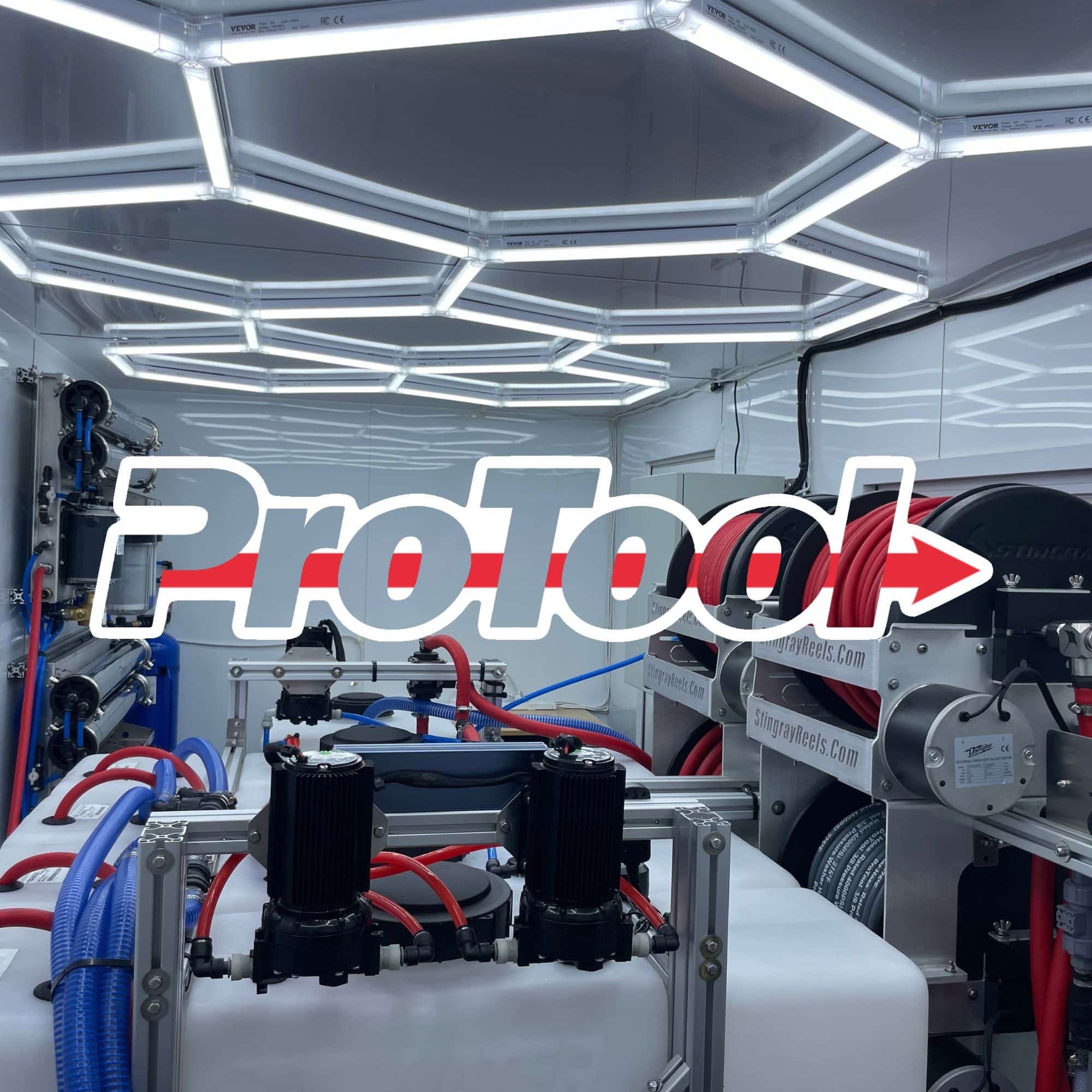
Table of Contents
- Best Pressure Washing Trailer for Residential Driveway Cleaning
- What Makes a Pressure Washing Trailer Good for Driveway Cleaning?
- How Many GPM Do You Need to Clean Residential Driveways?
- Is 3,000 PSI Enough to Clean a Concrete Driveway?
- What Size Surface Cleaner Works Best for Residential Driveways?
- Why a 100-Gallon Water Tank Works for Many Residential Jobs
- ProTool Utility Pressure Washing Trailer: A Residential Driveway Cleaning Setup
- Why Hose Management Matters When Cleaning Multiple Driveways
- Is a Trailer Better Than a Truck Skid for Driveway Cleaning?
- When Is a Larger Commercial Pressure Washing Trailer Worth It?
- Common Mistakes When Choosing a Driveway Cleaning Trailer
- Why ProTool Builds Equipment Differently
- Final Recommendation: The Best Trailer for Residential Driveway Cleaning
- FAQs
Best Pressure Washing Trailer for Residential Driveway Cleaning
The best pressure washing trailer for residential driveway cleaning is one with enough water flow to operate an appropriately sized surface cleaner, sufficient pressure for concrete cleaning, reliable water supply, and an efficient hose setup. For most residential contractors, a professional pressure washer in the 5–5.5 GPM range is a strong starting point.
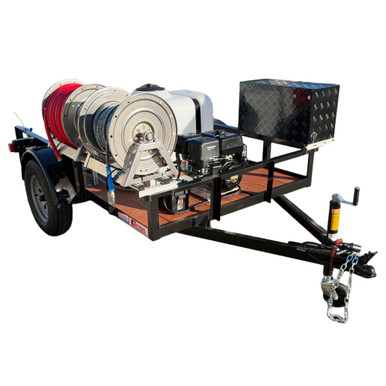
The ProTool Utility Pressure Washing Trailer is a practical choice for residential driveway cleaning businesses. It combines a 5 GPM, 3,000 PSI pressure washer with a 100-gallon buffer tank, 300 feet of pressure hose, 150 feet of incoming-water hose, and two electric stainless steel hose reels—all on a braked, 3,000-lb GVWR trailer.
It's designed for contractors who need a professional, organized cleaning setup without moving into a substantially larger commercial rig.
Our recommendation: For residential driveways, sidewalks, patios, and similar cleaning work, prioritize a well-integrated 5 GPM trailer over a system selected solely for its advertised PSI.
Explore the ProTool Utility Pressure Washing Trailer
Need an 8 GPM commercial setup, hot water, or a custom trailer? Request a ProTool build.
What Makes a Pressure Washing Trailer Good for Driveway Cleaning?
Driveway cleaning is different from simply spraying dirt off a surface.
A professional contractor needs to clean concrete consistently, cover the area efficiently, rinse away debris, and move between jobs without wasting time.
Five features matter most:
- Water flow (GPM): Supports productive rinsing and appropriately sized surface cleaners.
- Operating pressure (PSI): Provides cleaning force when matched to the surface and application.
- Surface cleaner compatibility: Helps deliver consistent coverage across larger flat surfaces.
- Water supply: Keeps the pressure washer supplied during operation.
- Hose management: Makes moving around properties and transitioning between jobs easier.
The trailer itself also matters. Weight ratings, brakes, equipment layout, and accessibility all affect how practical the system is to operate.
A powerful pressure washer on a poorly organized trailer can still be frustrating to use.
The ProTool Way: Build the entire system around the work—not just the engine and pump.
How Many GPM Do You Need to Clean Residential Driveways?
For a residential driveway cleaning business, 5 GPM is a strong professional starting point.
GPM stands for gallons per minute. It measures the volume of water a pressure washer delivers.
Water flow affects how quickly a contractor can rinse away loosened dirt and contaminants. It also influences the size of surface cleaner that can be used effectively.
Here's a practical comparison:
| Pressure washer flow | Driveway cleaning suitability |
|---|---|
| 2–3 GPM | Smaller areas and occasional cleaning; generally slower for professional driveway production |
| 4 GPM | Entry-level professional driveway cleaning |
| 5–5.5 GPM | Strong residential contractor setup |
| 8 GPM | Higher-production residential and commercial flatwork |
| 10.5 GPM | Larger commercial cleaning operations |
| Dual machines | Multiple operators and high-volume applications |
These are general equipment-selection guidelines, not guaranteed cleaning speeds.
Why 5 GPM Is a Good Residential Choice
A 5 GPM machine offers a useful balance between cleaning productivity, water demand, equipment size, and cost.
It can support a properly matched surface cleaner and provides substantial rinsing flow for residential concrete.
For contractors cleaning several residential properties per day, this is a meaningful step up from smaller consumer machines.
When Should You Upgrade to 8 GPM?
An 8 GPM pressure washer is worth considering when driveway and flatwork cleaning make up a substantial portion of your business, particularly if you're pursuing larger properties or commercial contracts.
The additional water flow can support larger compatible surface cleaners and higher production, provided the rest of the system—including water supply—can support it.
But more GPM also means greater water demand.
A bigger pressure washer isn't automatically the better choice for every residential business.
Is 3,000 PSI Enough to Clean a Concrete Driveway?
Yes. A 3,000 PSI pressure washer can clean many residential concrete driveways when used with appropriate equipment and techniques.
PSI stands for pounds per square inch. It measures water pressure.
Pressure helps remove contaminants, but the correct operating pressure depends on the surface condition, nozzle configuration, cleaning chemicals, and other factors.
Concrete isn't indestructible. Excessive pressure or improper technique can damage the surface, especially on newer, weakened, decorative, or previously treated concrete.
GPM vs. PSI for Driveway Cleaning
A common mistake is shopping for the highest possible PSI without considering water flow.
For professional flatwork cleaning, water flow is a major productivity factor.
Consider two pressure washers:
- Machine A: 4 GPM at 4,000 PSI
- Machine B: 5 GPM at 3,000 PSI
Machine A offers higher pressure.
Machine B offers 25% more water flow.
For many routine residential driveway-cleaning applications, the additional flow of Machine B can be advantageous for rinsing and surface cleaner operation, even though it has a lower pressure rating.
That doesn't mean 5 GPM at 3,000 PSI will outperform every 4 GPM at 4,000 PSI system. Actual results depend on the application, surface cleaner, nozzle selection, and cleaning method.
More pressure isn't the same thing as more productivity.
What Size Surface Cleaner Works Best for Residential Driveways?
A surface cleaner is one of the most useful accessories for professional driveway cleaning.
Instead of cleaning an entire driveway with a narrow spray pattern, a surface cleaner uses rotating spray nozzles beneath a cleaning head to cover a wider area.
This can improve consistency and reduce the time required to clean suitable flat surfaces.
Matching Surface Cleaner Size to GPM
A commonly used starting guideline is approximately four inches of surface cleaner diameter per GPM.
| Pressure washer flow | Approximate surface cleaner diameter |
|---|---|
| 4 GPM | 16 inches |
| 5 GPM | 20 inches |
| 5.5 GPM | 20–22 inches |
| 8 GPM | 28–32 inches |
| 10.5 GPM | 36–42 inches |
These are approximate selection guidelines, not universal compatibility rules.
Always follow the surface cleaner manufacturer's requirements for flow, pressure, nozzle sizing, and operating conditions.
A surface cleaner that's too large for the available flow may not clean effectively. One that's improperly configured can leave inconsistent results or damage surfaces.
Why the Right Size Matters
For a 5 GPM residential pressure washer, a compatible surface cleaner around 20 inches is a sensible starting point.
The goal is consistent cleaning coverage at a practical walking speed.
Don't buy the biggest surface cleaner you can find and assume your pressure washer will keep up.
Match the equipment. Then let it work.
Why a 100-Gallon Water Tank Works for Many Residential Jobs
The ProTool Utility Pressure Washing Trailer includes a 100-gallon water tank.
For residential driveway cleaning, a buffer tank helps maintain water availability when the incoming supply cannot instantly match pressure washer demand.
But it's important to understand what the tank does—and what it doesn't.
How Long Will 100 Gallons Last at 5 GPM?
At a continuous 5 GPM:
100 gallons ÷ 5 GPM = 20 minutes
That's approximately 20 minutes of theoretical continuous spraying with no incoming water, assuming the entire tank volume is usable.
In real operation, usable capacity and spraying time may vary.
If the customer's water supply replenishes the tank while you're cleaning, the operating time changes significantly.
For example:
| Incoming water supply | Pressure washer demand | Net tank draw |
|---|---|---|
| 5 GPM | 5 GPM | 0 GPM |
| 4 GPM | 5 GPM | 1 GPM |
| 3 GPM | 5 GPM | 2 GPM |
| 0 GPM | 5 GPM | 5 GPM |
This simplified calculation assumes continuous operation and steady incoming flow.
With a reliable residential water supply, a 100-gallon buffer tank can be a practical solution.
For jobs without water access, larger tanks may be necessary.
Why Not Just Install a 300-Gallon Tank?
Because water is heavy.
Water weighs approximately 8.34 pounds per gallon.
- 100 gallons: approximately 834 pounds
- 200 gallons: approximately 1,668 pounds
- 300 gallons: approximately 2,502 pounds
That's before counting the trailer, pressure washer, engine, reels, hoses, fuel, and other equipment.
A larger tank can require a higher-capacity trailer and tow vehicle.
For contractors who primarily clean residential properties with accessible water, carrying significantly more water may not be necessary.
The right water capacity is the one your jobs require—not the largest tank you can fit.
ProTool Utility Pressure Washing Trailer: A Residential Driveway Cleaning Setup
The ProTool Utility Pressure Washing Trailer brings together the equipment needed for professional residential pressure washing in an organized trailer platform.
Technical Specifications
| Feature | ProTool Utility Pressure Washing Trailer |
|---|---|
| Pressure washer | 5 GPM |
| Operating pressure | 3,000 PSI |
| Water storage | 100-gallon buffer tank |
| Trailer GVWR | 3,000 lb |
| Trailer brakes | Included |
| Engine starting | Electric start |
| Pressure washing hose | 300 ft, 3/8-inch |
| Incoming-water hose | 150 ft, 3/4-inch |
| Hose reels | Two electric stainless steel reels |
| Battery charger | Integrated 110V charger |
| Electrical connection | Recessed connection in utility lockbox |
Why These Features Matter for Driveway Contractors
5 GPM at 3,000 PSI: A practical combination for many residential concrete-cleaning applications, with useful flow for a properly sized surface cleaner.
100-gallon buffer tank: Helps accommodate variations in the incoming water supply.
300 feet of pressure hose: Provides working reach around residential properties and may reduce the need to reposition the trailer.
150 feet of incoming-water hose: Makes it easier to reach an available water connection without carrying separate loose hose.
Two electric stainless steel hose reels: Provide dedicated storage and powered retrieval for both pressure and incoming-water hoses.
Electric start and battery charging: Add convenience and help maintain equipment readiness.
Braked trailer: Adds braking capability when properly connected and operated with compatible towing equipment.
The result is a complete equipment platform designed around repeated residential cleaning jobs.
See the ProTool Utility Pressure Washing TrailerSee the ProTool Utility Pressure Washing Trailer
ProTool Utility Pressure Washing Trailer
$9,847.55
ProTool 5×8 Utility Pressure Washing Trailer — 5 GPM / 3,500 PSI Everything You Need. Nothing You Don't. Not every job calls for a massive… read more
Why Hose Management Matters When Cleaning Multiple Driveways
Imagine a contractor completing four driveway cleaning jobs in one day.
At every property, the contractor may need to:
- Position the trailer.
- Connect to the water supply.
- Deploy the pressure washing hose.
- Set up the surface cleaner.
- Complete the cleaning.
- Rinse the area.
- Retrieve the hoses.
- Secure the equipment and leave.
The pressure washer's specifications matter, but so does everything happening before and after the trigger is pulled.
Electric Pressure Hose Reel
The ProTool trailer includes 300 feet of pressure washing hose on an electric stainless steel reel.
That gives contractors substantial reach while allowing powered hose retrieval after the job.
Dedicated Electric Inlet Hose Reel
The second electric stainless steel reel holds 150 feet of incoming-water hose.
This is an especially practical feature for residential contractors.
The inlet hose isn't an afterthought. It's part of the complete system.
Having a dedicated reel keeps the hose organized and reduces the need to manually coil and store it after every job.
A trailer should make your daily workflow easier. Otherwise, what's the point?
Is a Trailer Better Than a Truck Skid for Driveway Cleaning?
Both can be excellent platforms for residential driveway cleaning.
Pressure Washing Trailer
A trailer provides a dedicated equipment platform that can remain separate from the tow vehicle.
It can be useful for contractors who want onboard water storage, hose reels, and room for accessories.
The tradeoffs include towing, trailer parking, maneuverability, and additional storage requirements.
Truck-Mounted Pressure Washing Skid
A truck skid places the cleaning equipment in the bed or on the chassis of a suitable truck.
It eliminates the need to tow a separate trailer and can be convenient in tighter residential neighborhoods.
However, it uses truck space and available payload capacity.
The better choice depends on the vehicle, equipment requirements, and how the contractor operates.
For a deeper comparison, see our guide to Pressure Washer Trailers vs. Truck-Mounted Skids.
When Is a Larger Commercial Pressure Washing Trailer Worth It?
A 5 GPM residential trailer is not the ideal system for every contractor.
Consider moving to an 8 GPM or larger commercial setup when:
- You regularly clean large commercial concrete areas.
- You want to operate a larger compatible surface cleaner.
- Your work requires higher production over extended periods.
- You need additional onboard water capacity.
- You plan to operate multiple pressure washers or support multiple operators.
- Your business requires hot water for appropriate grease- and oil-related cleaning applications.
Those requirements may justify a larger trailer, heavier-duty components, and a more substantial equipment budget.
ProTool designs and builds customized pressure washing skids and trailers for contractors with more demanding applications.
Request a Custom ProTool Pressure Washing Build
Common Mistakes When Choosing a Driveway Cleaning Trailer
Buying Based on PSI Alone
High PSI sounds impressive, but professional driveway cleaning depends on the combination of flow, pressure, surface cleaner compatibility, and proper technique.
Using an Oversized Surface Cleaner
A large cleaning head doesn't automatically mean faster work.
If the pressure washer cannot supply enough water for the cleaner's design, performance can suffer.
Ignoring Water Supply Requirements
A buffer tank helps manage supply variations, but the system still needs enough water for the intended operating conditions.
Forgetting Trailer Weight
A full 100-gallon tank weighs approximately 834 pounds.
Always evaluate the trailer's complete loaded weight, GVWR, axle ratings, tire ratings, hitch requirements, and tow vehicle capacity.
Overlooking Setup and Breakdown Time
Hoses, reels, connections, and equipment layout affect how smoothly a contractor moves from one driveway to the next.
A well-integrated system can make repeated daily operation more convenient.
Why ProTool Builds Equipment Differently
At ProTool, we design professional exterior-cleaning equipment around the way contractors actually work.
Our approach goes beyond choosing a pump and mounting it to a frame.
We consider equipment layout, fabrication, plumbing, electrical integration, hose management, accessibility, and how the complete system functions together.
Our builds are assembled and tested as integrated systems before shipment.
We also support customers long after delivery, helping diagnose equipment problems and identify solutions. Parts and services may be billable depending on the circumstances.
Qualifying ProTool skids, carts, and systems carry our lifetime warranty, subject to terms and exclusions. Trailer and third-party component coverage may differ.
We build systems for contractors who expect their equipment to work as hard as they do.
Better integration. Smarter layouts. Real support.
That's the ProTool Way.
Final Recommendation: The Best Trailer for Residential Driveway Cleaning
For a contractor primarily cleaning residential driveways, sidewalks, patios, and similar flatwork, a professionally integrated 5 GPM pressure washing trailer is a strong starting point.
The ProTool Utility Pressure Washing Trailer offers:
- 5 GPM at 3,000 PSI
- 100-gallon buffer tank
- 3,000-lb GVWR trailer with brakes
- 300 feet of pressure washing hose
- 150 feet of incoming-water hose
- Two electric stainless steel hose reels
- Electric-start engine
- Integrated 110V battery charging
It's designed for contractors who want a practical, organized, ready-to-work pressure washing platform without stepping into a substantially larger commercial build.
Explore the ProTool Utility Pressure Washing Trailer
Need more water flow, hot water, a larger tank, or a custom setup?
The right flow. The right pressure. The right equipment for the job.
That's the ProTool Way.
FAQs
What is the best pressure washing trailer for residential driveway cleaning?
For residential driveway cleaning, a professionally equipped 5–5.5 GPM pressure washing trailer with a compatible surface cleaner, adequate water supply, and organized hose management is a strong choice. The ProTool Utility Pressure Washing Trailer delivers 5 GPM at 3,000 PSI with a 100-gallon buffer tank and two electric stainless steel hose reels.
Big cleaning performance. Smart equipment. No unnecessary nonsense.
How many GPM do I need for driveway cleaning?
Four GPM is a practical professional starting point, while 5–5.5 GPM is ideal for many residential driveway cleaning businesses. An 8 GPM system can increase production on larger residential and commercial flatwork when paired with properly sized equipment and adequate water supply.
Buy the flow your jobs demand. Not just the biggest number on the brochure.
Is 3,000 PSI enough to clean a concrete driveway?
Yes. A 3,000 PSI pressure washer can clean many residential concrete driveways when paired with appropriate nozzles, cleaning techniques, and a compatible surface cleaner. Operating pressure should always be matched to the concrete's condition to avoid surface damage.
Concrete is tough. That doesn't mean you need to beat the hell out of it.
What size surface cleaner should I use with a 5 GPM pressure washer?
A surface cleaner around 20 inches is a common starting point for a 5 GPM pressure washer. Always confirm the manufacturer's flow and pressure requirements and use correctly sized spray nozzles for consistent cleaning performance.
Bigger isn't always faster. A properly matched setup is.
Is a 100-gallon water tank enough for driveway cleaning?
A 100-gallon buffer tank can be sufficient for residential driveway cleaning when a reliable incoming water supply is available. At 5 GPM, 100 gallons provides approximately 20 minutes of theoretical continuous spraying without replenishment, assuming the entire volume is usable.
Carry the water you need. Not an extra thousand pounds just for bragging rights.
Is 5 GPM or 8 GPM better for a driveway cleaning business?
A 5 GPM pressure washer is a strong choice for residential driveway cleaning, offering practical productivity with moderate water demand. An 8 GPM system is better suited to higher-production work, larger surface cleaners, and commercial flatwork, provided the water supply and supporting equipment can handle the additional flow.
Five GPM gets the business moving. Eight GPM helps take on the bigger jobs.
Should I buy a pressure washing trailer or a truck-mounted skid?
A pressure washing trailer provides a dedicated equipment platform that can be separated from the tow vehicle, while a truck-mounted skid offers a more compact setup without towing a separate trailer. Both can be effective for driveway cleaning; the better choice depends on your vehicle, parking conditions, water capacity, and equipment requirements.
Different platforms. Same goal. Get the job done right.
Does ProTool build commercial driveway cleaning trailers?
Yes. ProTool offers the Utility Pressure Washing Trailer for residential contractors and builds custom pressure washing skids and trailers for higher-flow, hot water, and demanding commercial cleaning applications. ProTool designs, fabricates, integrates, and tests complete cleaning systems before shipment.
Need something bigger? Good. We build those too.