How to Build a Custom Soft Wash Skid or Trailer: Pumps, Tanks, Plumbing & Controls
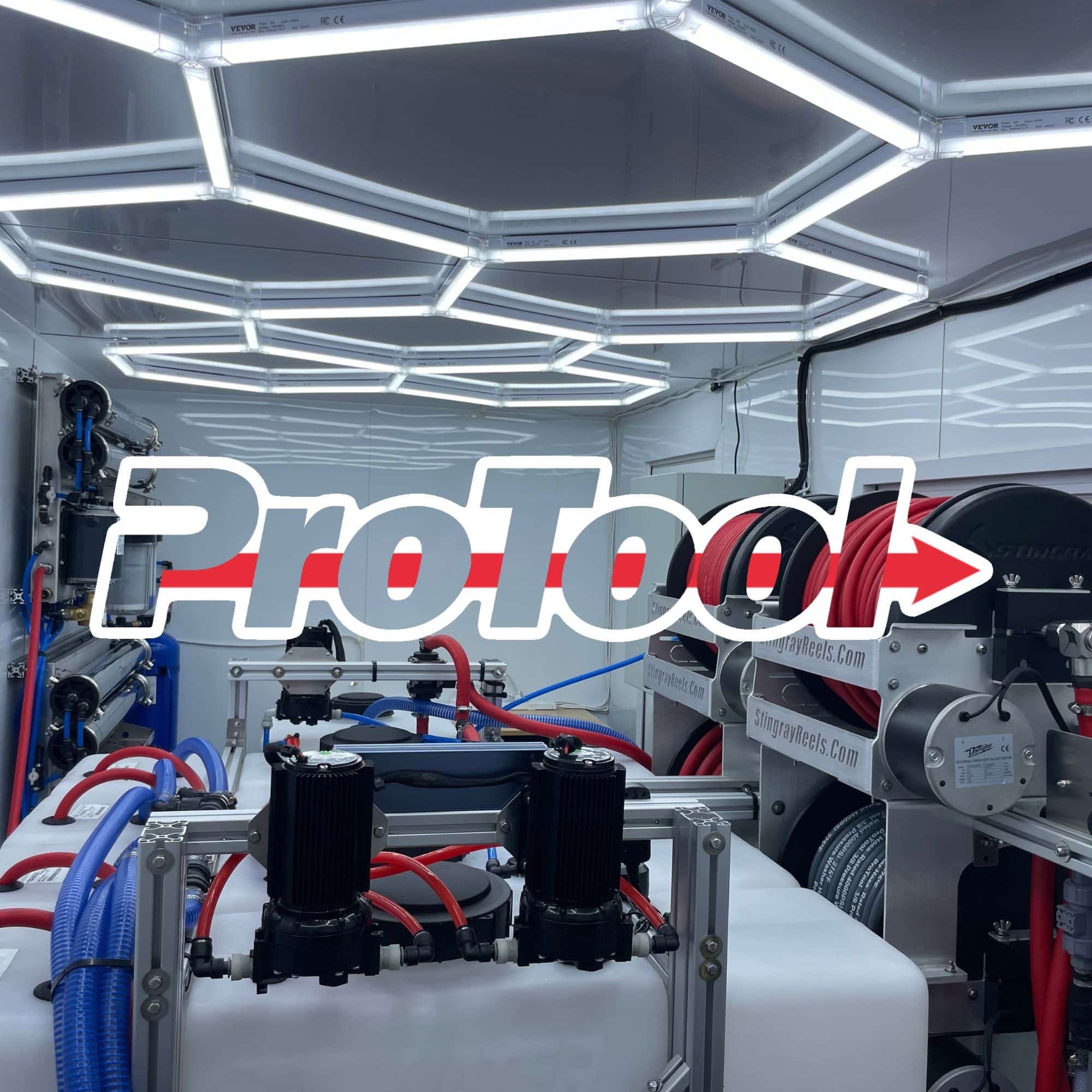
Table of Contents
How to Build a Custom Soft Wash Skid or Trailer: Pumps, Tanks, Plumbing & Controls
A great soft wash skid isn't just about how far it shoots. It's about consistent chemical delivery, reliable equipment, and a setup that works as hard as you do.
A soft wash skid might look simple from the outside.
A pump. A few tanks. Some hoses. Maybe a chemical proportioner.
But anyone who's spent time running a commercial soft wash system knows there's a lot more going on underneath.
Choosing the wrong pump can limit your performance. Poor plumbing can restrict flow. Incompatible components can fail prematurely. And a badly designed layout can make something as simple as filling a chemical tank or retrieving a hose unnecessarily frustrating.
Whether you're building a truck-mounted soft wash skid or a complete soft wash trailer, the goal is the same: deliver the right cleaning solution, at the right flow and pressure, with equipment that's easy to operate and maintain.
At ProTool, we design and manufacture soft wash skids and integrated cleaning systems around the way contractors actually work.
Here's what matters when putting one together.
1. Start With the Type of Soft Washing You Do
Before choosing a soft wash pump, think about the work the system needs to handle.
A contractor primarily cleaning residential roofs and siding may have different equipment requirements from a crew washing large commercial buildings or working with long hose runs.
Consider your typical jobs:
- Residential roof cleaning
- House washing and siding
- Commercial building exteriors
- Large exterior surfaces requiring higher-volume chemical delivery
- Combination pressure washing and soft washing
These applications influence your preferred pump capacity, hose length, chemical delivery setup, and water storage.
They also help determine whether a compact soft wash skid or a larger soft wash trailer is the better platform.
Don't start by buying the biggest pump. Start by figuring out what the pump needs to accomplish.
2. Choosing a Soft Wash Pump: 12V vs. BPX25 vs. P40
The pump is one of the most important decisions in a custom soft wash skid.
Different pump technologies offer different operating characteristics, and choosing the right one affects the entire system.
ProTool offers soft wash configurations using 12V pumps and gas-powered BPX25 and P40 systems.
12V Soft Wash Pumps
A 12V soft wash system can be an attractive option for contractors who want a compact, electrically powered chemical delivery setup.
These systems rely on battery power and appropriate electrical controls rather than a dedicated gasoline engine.
That makes battery capacity, charging, wiring, and duty cycle important considerations.
A 12V soft wash skid can work well for contractors who want a relatively compact equipment package, provided the selected pump meets their operating requirements.
BPX25 Soft Wash Pumps
ProTool's BPX25 system is a gas-powered soft wash option rated around 7 GPM, with operating pressure capability in the approximately 220–290 PSI range depending on configuration and conditions.
It provides an alternative to a 12V pump for contractors who want a gas-powered delivery system.
The BPX25 is driven by a Honda GX200 electric-start engine in ProTool's applicable configurations.
P40 Soft Wash Pumps
The ProTool P40 system is another gas-powered soft wash option, rated around 11 GPM with pressure capability up to approximately 300 PSI.
For contractors requiring greater solution delivery capacity, the P40 provides a higher-flow option than the BPX25.
Like the BPX25, ProTool's applicable P40 configurations use a Honda GX200 electric-start engine.
Which Soft Wash Pump Is Best?
The answer depends on the work, delivery requirements, and equipment package.
| Pump Type | General Characteristics | Considerations |
|---|---|---|
| 12V | Electrically powered, compact configurations | Battery capacity, charging, duty cycle |
| BPX25 | Gas-powered, approximately 7 GPM | Engine, regulator, plumbing, delivery requirements |
| P40 | Gas-powered, approximately 11 GPM | Higher solution flow, engine and plumbing requirements |
Flow and pressure figures describe equipment capabilities, not a guarantee of simultaneous output at maximum values. Actual performance depends on the complete system.
For many contractors, the best choice isn't simply the pump with the highest rating.
It's the pump that delivers the required solution volume reliably through the hoses and equipment you plan to use.
[Explore ProTool Soft Wash Pumps & Systems →](https://protool.shop/systems-and-equipment/soft-wash-pumps-systems/
FAQs
What equipment do I need to build a soft wash skid?
A commercial soft wash skid typically includes a soft wash pump, water and chemical tanks, chemical-compatible plumbing, delivery hoses, hose reels, and equipment controls. Systems using proportioning manifolds may also include separate water, sodium hypochlorite, and surfactant feeds.
What is the best pump for a soft wash skid?
The best soft wash pump depends on the cleaning applications, required solution flow, hose length, and power requirements. ProTool offers 12V soft wash systems, BPX25 gas-powered pumps rated around 7 GPM, and P40 gas-powered pumps rated around 11 GPM.
Is a 12V soft wash pump better than a gas-powered pump?
Neither is automatically better. A 12V soft wash system can provide a low-cost, compact electrically powered setup, while gas-powered BPX25 and P40 systems offer different flow and pressure capabilities. The right choice depends on the work and equipment requirements.
What is the difference between a BPX25 and P40 soft wash pump?
The ProTool BPX25 and P40 deliver comparable spray distance and cleaning performance, but they're built for different priorities.
BPX25 — The Residential Killer: At approximately 7 GPM, the BPX25 delivers the reach and cleaning power contractors need while using less solution. That means better control over chemical application, less chemical consumption, and less unnecessary runoff. It's an excellent choice for residential roof cleaning, house washing, and precision soft washing.
P40 — The Commercial Killer: At approximately 11 GPM, the P40 delivers substantially more solution volume while maintaining comparable reach. That extra flow makes it ideal for larger commercial properties, faster rinsing, and applications where moving more water improves productivity.
Doing both residential and commercial work? You can't go wrong with either. Choose the BPX25 for greater chemical efficiency and control, or the P40 when higher flow and faster rinsing are priorities.
Do I need a chemical metering system on my soft wash skid?
A chemical metering system is useful when you want to adjust the proportions of water, sodium hypochlorite, and surfactant without manually premixing every solution. The system must use components compatible with the chemicals and pump configuration.
What size tanks should I use for a soft wash skid?
Tank sizes depend on your pump capacity, cleaning applications, job-site water availability, and vehicle or trailer payload. Separate water, sodium hypochlorite, and surfactant tanks are common in systems using chemical proportioning. Never go more than 100 gal of SH unless you have Hazmat certifications and placards.
Can I build and price a custom soft wash skid online?
Yes. The ProTool Build Configurator lets you explore soft wash skid and trailer configurations, choose available equipment and upgrades, and see live estimated pricing. You can save your design privately or submit it to ProTool when you're ready.